
ELECTRIFICATION
The decarbonization of the transportation sector through electrification is one of seven key strategies stated in 2020 Energy Master Plan that will help achieve the State’s goals of 100% clean energy by 2050. The transportation sector accounts for 42% of New Jersey’s Greenhouse Gas (GHG) emissions, it is clear NJ TRANSIT plays a vital part in reducing emissions. Governor Phil Murphy signed bill [S2252/A4819] or law P.L.2019, c.362. (C.48:25-1 to 48:25-11) that set ambitious goals to increase electric vehicles and charging infrastructure in the state. Specifically, the law requires by 2025 at least 25% of state-owned non-emergency light duty vehicles shall be plug-in electric and 100% by 2035. Additionally, NJ TRANSIT must purchase at least 10% zero-emission buses by 2024, 50% by 2026 and 100% by 2032. The NJ TRANSIT 10-Year Strategic Plan and 5-Year Capital Plan address the need for bus garage modernization to support a zero-emission fleet by 2040.

Battery Electric Buses
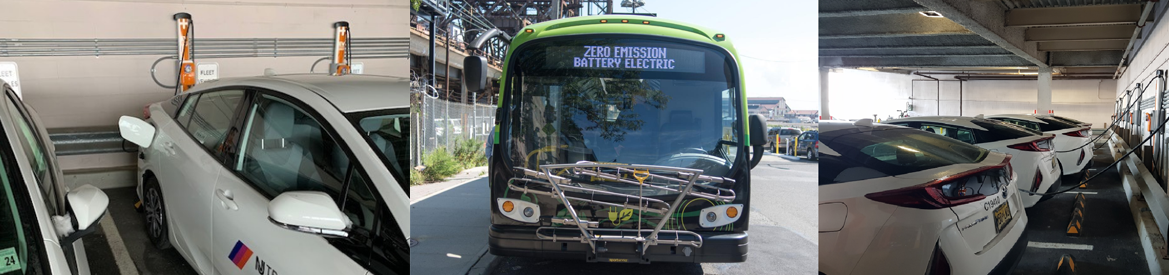
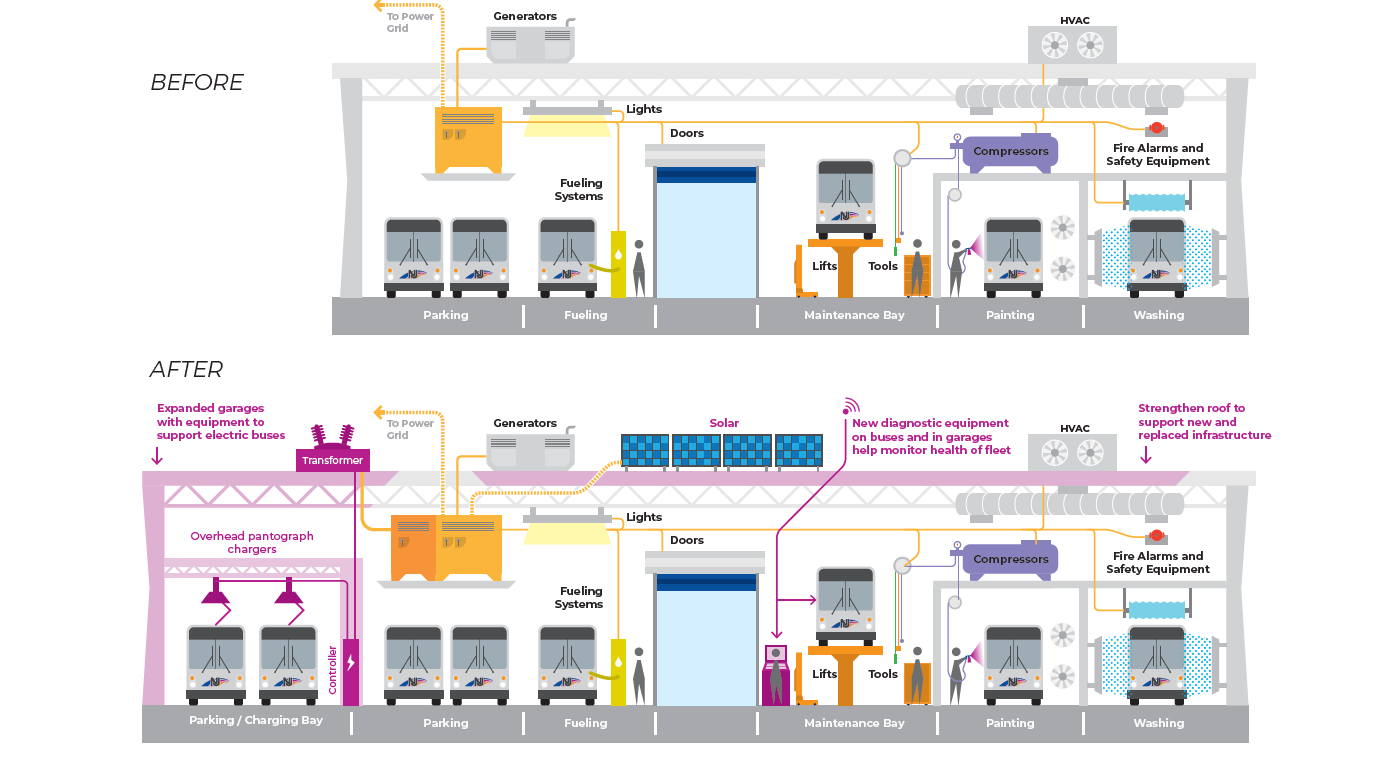
NJ TRANSIT is planning for the transition to a cleaner bus fleet, beginning with a limited deployment of Battery Electric Buses (BEB) at the Newton Avenue Garage that serves neighborhoods throughout the city of Camden. Starting in Camden is an intentional choice to see how these buses operate in an urban, frequent-stop market, while also giving an opportunity for a predominately minority and low-income area to gain early access to the newest electric bus technology. Camden has some of the state’s highest asthma rates and related hospitalizations. With the acquisition of these eight 40-foot BEB and necessary electric charging infrastructure, Camden residents will experience positive public health benefits from decreases in GHG emissions and improved air quality. The first BEB are anticipated to be on the road in 2021 and will provide an opportunity to measure the impacts on electricity usage, operations, training, and long-term feasibility of an electric bus fleet, while contributing to improved public health outcomes.
Fleet Electrification
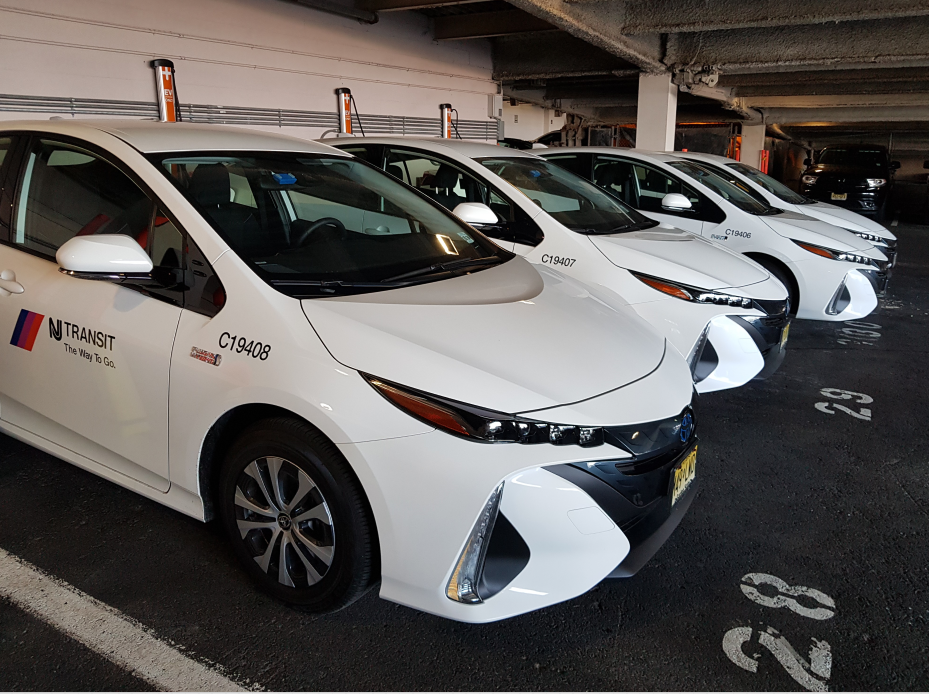
Six electric vehicle chargers have been installed at NJ TRANSIT’s Headquarters in Newark for its non-revenue fleet of plug in hybrids vehicles. NJ TRANSIT is planning for the future of an all-electric fleet and is working with other State agencies to ensure the State mandates are met.
Rail
NJ TRANSIT is always looking to improve and reduce emissions from Rail operations. For example, NJ TRANSIT operates diesel locomotives on wayside electric power when possible and has installed engine start-stop systems to reduce idling. NJ TRANSIT has purchased 35 ALP-45A Dual Power Locomotives, which can operate on both diesel and overhead-catenary power. NJ TRANSIT is in the process of purchasing 17 additional ALP-45A Dual Power Locomotives to replace older GP-40 type locomotives, further modernizing the NJ TRANSIT locomotive fleet with vehicles that are both more versatile and reliable while reducing emissions through improved emissions controls when operating on diesel. Each GP40 locomotive replaced reduces NOx emissions by nearly 47 tons annually. NJ TRANSIT will continue work to electrify its rail operations where feasible as well as investigate new battery technologies for rail vehicles. As a part of the State's Energy Master Plan, Strategy 1 Reduce Energy Consumption and Emissions from the Transportation Sector, NJ TRANSIT will introduce a battery electric train prototype by 2025.